
The Journey Begins...
| Date: Monday, November 03, 2025. 0000Z |
| Location: 43°52'40.2N, 8°1'13.1E — Santo Stefano al Mare, IT |
The Journey Begins…
I know I said I wouldn’t discuss the pain and difficulty of transferring a boat from one registry to another, but I think it’s worth it in the vague chance someone else has to go through the bureaucratic process. I won’t do it right now, though!
This post tells the tale of our relaxing sail from Santo Stefano al Mare in Italy to Valencia in Spain, by way of Saint Tropez and Barcelona. All four locations are very much worth visiting.
The boat sale concluded on April 15th, of 2025. From that moment forth, “Into The Mystic” was mine. My father used to remind me that the two happiest days in ones life are the day you buy the boat, and the day you sell it. Having bought and sold a few boats in my time, I’m not sure he was totally correct. The joy and excitement on the day you take ownership of a new boat far outweighs any sense of relief you feel when you sell your previous boat. This was definitely a day of overwhelming emotion. I have wanted to own a Hallberg Rassy for quite a considerable period of time. I was beginning to think I would never actually own one.
Having flown to see the boat twice, and having helped deliver the boat to Imperia for the survey, my first opportunity to spend a night on my own boat happened on Saturday, April 26th. I spent a week on board, working from the boat. I also had to add decals with her new name, as part of the re-registration process. I managed to get all the formalities in place, including filing the insurance and registration paperwork with the marina.
The next trip was in late June, and this was to wave goodbye to Santo Stefano and begin the journey to Ireland! When we’re done, we’ll have covered a distance of almost 2,000 nautical miles. But first, the job at hand was to get to Valencia Mar where she was booked in from early July until mid-September. I’m sure I’ve said this before, but moving a boat from one location to another, isn’t always the idyllic experience you might expect. Usually these moves are dictated by the calendar and by the availability of vacation days, etc. When you have a flight booked, departing from a distant airport, and you’re weather-bound somewhere along the route, it can be very frustrating if not stressful. So you’re trying to balance how much distance you can reasonably cover against worst-case scenarios and other factors. From Italy to Spain, the big unknown is the Gulf of Lion. Winds can get funnelled through this gap between the mountains, and the Mistral can blow up with short notice. Wikipedia says it “produces sustained winds averaging 50 km/h (30 mph), sometimes reaching 100 km/h (60 mph). It can last for several days.”
To be absolutely sure of an up to date weather forecast, the plan was to sail to Saint Tropez. We could then see what the three day forecast looked like, and if it was clear, “shoot the gap” to Barcelona. A lot of boats go further inland to Marseilles but Sain Tropez seemed more convenient and anyway, a nicer place to visit. Saint Tropez Marina is not cheap, but it is very centrally located in the town, and an excellent facility. This raises an interesting routing choice. Normally my ideal route would mix a day or two on the hook with a marina day, but when you’re doing a delivery with unknown weather conditions, marina stops are a better choice. When it comes to choosing a marina, I make the decision based on my length of stay. For example, as we had only planned a single night in Saint Tropez, choosing the expensive marina in town is a no-brainer. If we were intending to stay for a few days, or if we were planning to leave the boat unattended for a longer period, I’d have chosen a cheaper marina. Generally the trade-off is the quality of the facilities in the marina and also the proximity to the town/airport. In Saint Tropez for example, we were a short walk from the centre of things.
So this all kicked off on June 21st. I flew to the boat, and again spent the first week working on board. I had purchased a local SIM and a MiFi device for this purpose, and apart from the 30C heat, it was a breeze. Last-minute preparations always take longer than you expect, but I had already done quite a bit of work the previous April. This had involved installing a new chart plotter and VHF radio, as well as reprogramming the AIS with our new MMSI. Ruth flew out a few days later, and we departed in the late afternoon on Friday, June 27th. We sailed overnight and arrived very early in Saint Tropez. I was keen to leave Santo Stefano al Mare before it got dark, and it wasn’t that long of a trip. The wind ranged between zero and four knots, so sailing was out of the question. We actually arrived around 7AM, and radioed the marina as is the norm. In fact, the office wasn’t open and they weren’t prepared to accept us until late afternoon. They were surprised to hear from us so early, which I find amusing. Most modern marinas are used to boats arriving at all hours, as it can be very difficult to plan an exact ETA when you’re subject to the vagaries of wind and tide. They usually have a night staff of security people who can assign a berth for you and you can complete the formalities in the morning when the office opens. Saint Tropez is a visiting spot for a lot of superyachts and other very expensive craft. So much so that their marina office has its own VTS (Vessel Traffic Service) operating on VHF Channel 9. They told us to come back in an hour or so when the office was open. We were pretty tired at this point, so we motored around the bay, slowly. Eventually it was time to call them again and this time they told us there wouldn’t be a free berth until after 4PM! We asked if they could at least direct us to a buoy or nearby anchorage and they relented. They found us a “temporary” slot in amongst all the oversized tenders. As usual for Saint Tropez (apparently), we then had to wait until the marina crew could meet us at the port entrance, which thankfully didn’t take too long.
They met us in a large RIB and we followed them to our berth. They helped us squeeze in and took our lines. After a short nap, it was off to explore Saint Tropez. We had a lovely day exploring the town and it was Ruth’s first time to arrive in a different country by sailing vessel. We had changed the courtesy flag from Italy to France during the night. They offered us a better berth later on that day, but we were happy with the temporary one. Especially as we would be leaving the next day.
Into The Mystic is unusual for a ‘352 in that she has a smaller diesel tank. The previous owner had found a leak in the main tank and installed a smaller tank inside the main one. Our total capacity on board is now around 120 litres. We also carry two jerry cans with 20 litres each, for a total of 160. A conservative estimate on fuel usage would say we should burn around two litres per hour. Our number was higher than that. Probably closer to 4 (more on that, later!). Even at 4 litres, we would have 40 hours of motoring, without an issue. To avoid having to worry about it, we decided to top up before we left for Barcelona, a habit/tradition we would repeat in every port. As the fuel dock was awkward for us and we wanted an early start, we decided to use the jerry cans. We emptied both into the tank and refilled them by carrying them ourselves to the fuel dock. Tiring work, but it was great to have full tanks again when we departed. The weather forecast was for light to no winds for three to four days, so we headed for Barcelona.
The trip out from Saint Tropez and around the corner, was amazing. We threaded our way through a few little islands before venturing out into the Gulf of Lion. One or other of the islands was a French naval base. The officers housing was on the Western side of the island, and the houses were bathed in beautiful hues as the sun set. It definitely looked like a nice place to live and work. Again we motored through the night, with little to no wind. On our second day out, the wind picked up a bit and we managed to get the sails up for the first time. The winds ranged between 8 and 12 knots, which isn’t exactly a lot for a 6.7 tonne boat like a Hallberg Rassy. They are renowned as blue water cruisers, who can take bad weather in their stride. The down side to that is they need a good breeze to get going. We found we were furling and unfurling the sail, and starting/stopping the engine a lot, while we took advantage of whatever breeze showed up.
The AIS was a god-send because we could see all of the main shipping traffic crossing in front and behind of us. More importantly, they could see us! In the early morning, Ruth watched as a fleet of fishing boats came alive on the AIS, going from dormant targets to moving obstructions. Eventually, we could make out the entrance to our marina, Port Olimpic very close to the centre of the city. Again, we chose a marina which was close to town rather than a cheaper one further out. Expecting a similar reception to Saint Tropez, we called them on VHF 9 and anticipated a two-man crew on board a RIB to meet us. No such luck! We tried to explain in bad Spanish that we had a long keel and if they had a small RIB or inflatable boat to help push us into the berth, it would be appreciated. They misunderstood our request, and asked that we pull alongside the fuel dock, instead. After a lot of confusion, due to our lack of fluency, they told us where our assigned berth was, and wandered over to take our lines. We wasted no time in exploring the city, or at least that part of it which was in walking distance from the marina. It is truly a lovely experience to make sure everything on board the boat is secure, shore power is connected, you’ve changed out of your sailing clothes, and are walking to a nearby restaurant for a well-deserved beer and dinner. There’s nothing quite like it. I can safely say that this, and the guilty pleasure of jumping off the back of the boat into warm, azure water while at anchor, make even the stormiest passage worthwhile.
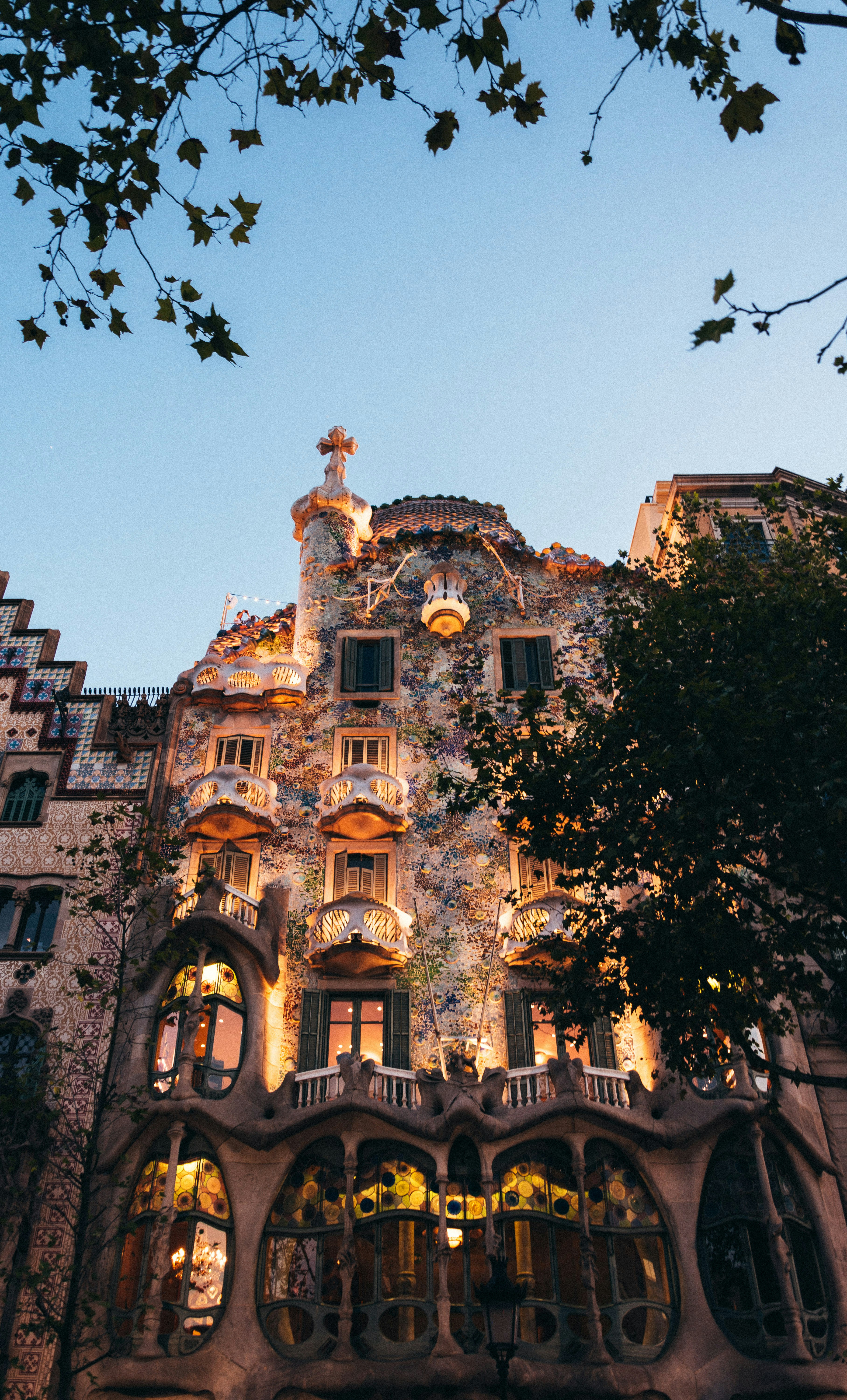
While I’m not usually a fan of those open-top tour buses, my reluctance to Ruth’s plan was entirely misplaced. The next day, we bought a ticket for the bus, which allowed us 24 hour access. We managed to get to grips with all of the various districts in the city and our recurring refrain was “we’re coming back here…” We of course visited the Sagrada Familia and naively thought we could visit the famous cathedral. After downloading the app, it informed us that there was ticket availability for July 15th! A week after we had returned home. Our pre-trip planning had told us to avoid La Rambla, which seems to be a bit like our own Temple Bar on the scale of “Tourist Traps To Avoid”. We were worried that we might not have anywhere else to visit, but we were incredibly wrong. There is so much to see in Barcelona that it is safe to say, you’d need at least a week. In our case, our original timetable had us leaving on the second of July, but we quickly revised our itinerary. First off, if we left late in the day, we would arrive in Valencia quite late, which should always be avoided. Not just in Valencia. Personally, I prefer to arrive in a marina in the early afternoon at the latest. This gives you time to complete the formalities and explore, a little bit. Ideally, with a “day off” the next day, to tour the new location. Arriving under cover of darkness is not for the faint-hearted.
We decided, on mature reflection, that another day in Barcelona, followed by an early start, would put us in Valencia in the early afternoon. We didn’t need a lot of convincing. We still had some hours left on our bus ticket so we decided to try one of the other routes. The issue here of course is that our ticket was due to expire at around 11:30 in the morning. We got on the bus without any problems, but once that epoch had passed by, we knew that getting off the bus would mean a long walk, a new ticket, or an expensive taxi journey. We persevered. This did involve baking in the noonday sun, while touring the Olympic grounds at the far-end of the city. But overall, it was worth it. We both agreed we would definitely return.
As usual, our early start wasn’t as early as we would have liked. We decided this time we would motor up to the fuel dock again, and refill the tanks. The trip from Barcelona to Valencia wasn’t as long a journey and doesn’t involve things like the Mistral, but we worked on the basis that “if it’s available, we should stock up.” This, however, meant waiting for the fuel dock to open up, which didn’t happen until 9:30AM so our planned departure time was delayed somewhat.
The trip to Valencia was again an overnight journey and again passed off without a hitch. We motored through the night due to the lack of any breeze, and closed on Valencia itself in the late afternoon. Valencia has at least two main marinas and it’s important to know which one you’re heading to. In my case, I had read complaints online from people who had gone to the wrong one, so I did my homework before ever we departed Dublin. One marina is to the north of the main port, and the other is to the south. Valencia Mar was to be our home until September 2nd, and to reach it, you must first cross the TSS in front of the entrance to the main harbour. Traffic Separation Schemes require that sailboats cross at right angles and as quickly as possible. We sailors are in total agreement that we want to get across quickly. It is like a frog crossing a motorway. Just because we broadcast an AIS signal does not mean that large ships can steer around us. With Ruth down below at the chart plotter, studying the AIS signals of the ships entering the port, and me on the helm, staring at the large metal objects speeding towards their destinations, the tension levels were higher than normal. We watched as one large container ship made her way to the port. We decided to aim close for that vessel, and steer behind her. Off in the distance was a ferry from Ibiza or one of the other islands. Ruth noticed that the other boat, the ferry, was actually increasing speed. They went from around 18 knots to over 22 knots! We had to again steer at a right angle to our desired course and head further away from Valencia, to try and avoid the behemoth. Sure enough, it streaked past us at a rate of knots, and we were finally able to turn towards Valencia Mar, and cross the TSS. At this point, we had gone so far out of our way, that we were crossing at the start of the TSS.
Eventually we motored up to the entrance of the marina, just as it was getting dark. Valencia Mar is actually one of three marinas all with the same entrance. We were heading right once we entered. We couldn’t find a fuel dock or office building, so we motored in. Usually I would use the handheld VHF radio as I approach, and talk to the marina staff while also looking around and steering. There was no answer from the staff on channel 9. On the next leg, I discovered that my handheld VHF radio can’t be heard by the marina staff on their radios. From now on, we will always use the main radio to contact the marina.
Eventually, as we slowly motored around the marina, we could hear one of the evening staff shouting. They directed us to our berth, and finally we were tied up. I am still a bit hesitant to berth “stern-to” given the tendency of the boat to ignore any and all instructions from the helm, when travelling in reverse. There is a technique which involves going to neutral, turning the wheel exactly the way you don’t want to go, dropping into forward gear with hard revs for about four seconds, dropping back to neutral, and swinging the wheel where you do want to go, followed by reverse gear. Attempting this in a busy marina at night is not recommended. Especially if there’s a cross wind. The bow will fall off the wind very quickly. As she was going to be berthed in Valencia for two months, we judiciously decided to go “bows to”. The down side of this of course is that you have to climb over the bow pulpit to get on and off the boat. The marina in Valencia is quite low, as well.
No matter, we had arrived. In around ten days of sailing we had covered 900 nautical miles, and spent some enjoyable days in Saint Tropez and Barcelona. By the time we had secured everything, and chatted briefly to the marina staff, it was around 10PM. We were operating under the illusion that Spanish restaurants stayed open until all hours. We discovered the two restaurants at the marina were no longer serving food. We quickly called a taxi and asked him to “take us to the restaurant area.” This turned out to be a tourist-y area on the north side of the harbour. Again, most restaurants were closing their kitchens, so we hurriedly ordered food and returned back to the boat. We didn’t get any time to explore Valencia as our flight was around noon the next day. Just enough time to secure the boat for her two month visit, clean up, get rid of any leftover food (we donated it to a nearby boat), pack our bags and grab a taxi to the airport. It’s a pity, because we were looking forward to exploring Valencia.
Photo by Theodor Vasile on Unsplash